How to Buy a 996 for Zero Dollars. The Auction Guide
To buy a car right on IAAI/Copart, first understand why you're buying it there and not from a private seller or a dealer. Reasons differ, but the most common case is simple: owning the car you love for more reasonable money. It comes with risk, but with the right approach the risk is controllable.
I could write "do A, B, C" and it would be easier. But without context, buying at auction can turn out riskier than it looks. So first, context.
The task: buy the car at 30-50% of retail. Better yet, at zero. And not a figurative zero, an absolutely real one. I'll get to that part at the end.
Titles
Auction cars come with two types of paper: clean title and salvage title. Other types exist, but they don't work for road use in the US. Certificate of destruction, for example: it can even be a brand new car that fell off a trailer on its way to the dealer, and the dealer totaled it. A car like that can never be registered in the US. It's a parts source, nothing more.
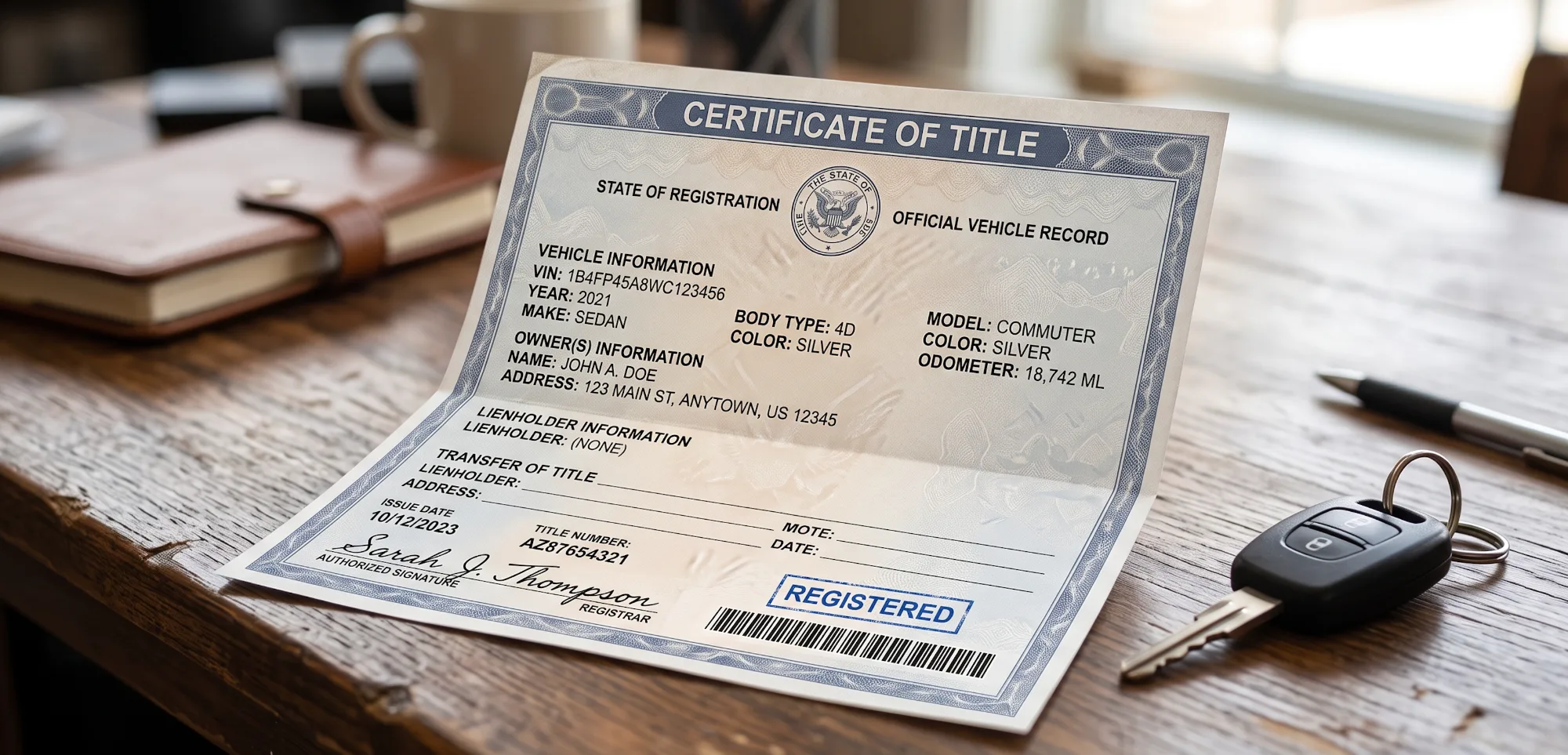
Clean title is simply a used car you can register the same day. It has its own traps, more on those below.
Salvage happens like this: insurance runs the damage through a shop, and if the repair estimate comes to about 50% of the car's value, insurance totals the whole car, regardless of what the repair actually costs to do. That gap between the shop's invoice and the real cost of fixing is where the entire economics of this game lives.
Which damage to buy
Hail. A favorite of dealers from countries where labor is cheap, because in essence it's cosmetics: dented panels, sometimes glass. Expensive for a shop and an insurer, not for you. All else equal, hail is probably the best damage there is. Everything else you judge like a regular used car: mileage, overall visual condition.
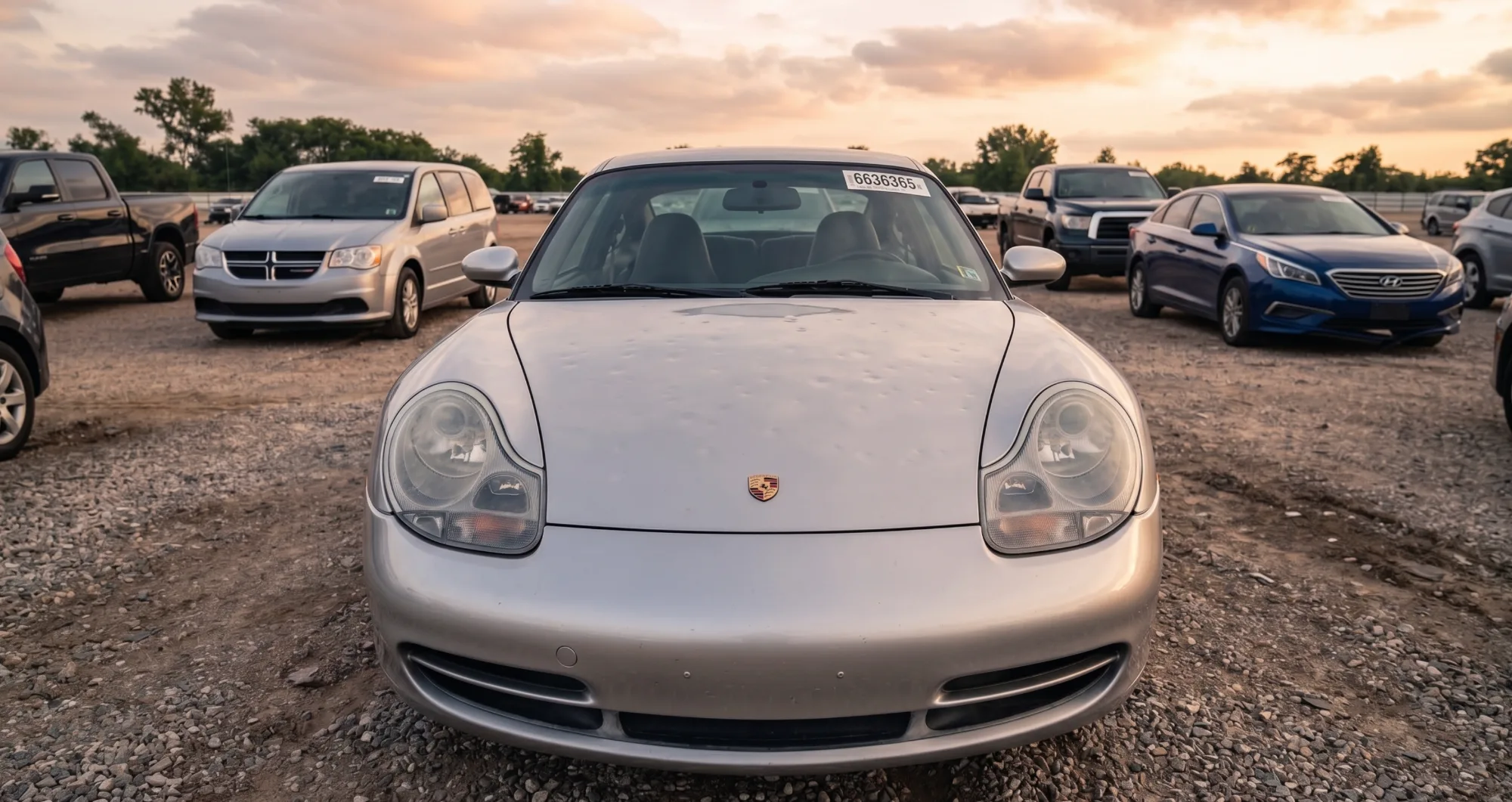
Quarter panel hit, a side hit, ideally a glancing one. A quarter panel at a shop costs the insurer a fortune, on a car like this it's almost an instant total. In reality the repair isn't that heavy, especially with some experience. No experience: ask a local shop in advance what they'd charge. These cars go below the usual money.
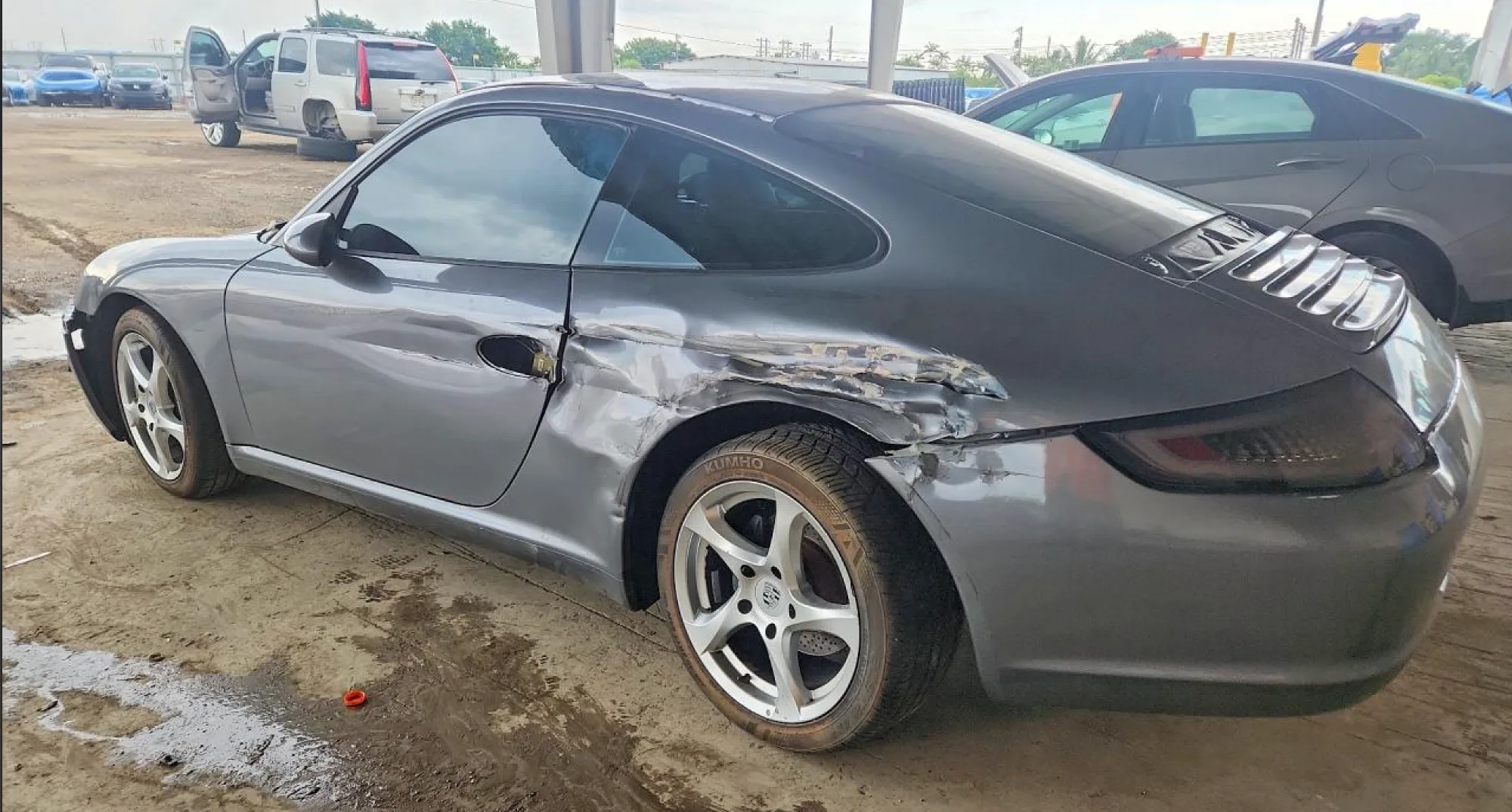
Side scuffs down the whole line. They sell low because there are many panels to work, but the work itself isn't complicated.
Front hit. Unpleasant for dealers: a lot of small work, and every piece of it costs. I personally prefer this damage. The nose on 996 is soft, it pulls out easily, the frame rarely suffers, and when it does, since it's soft, a 200 dollar frame puller from Harbor Freight and a piece of wood is often enough to bring it true. More often still, it's just the metal bumper support bent, frunk creased, lights and the plastic around them broken. Small business.
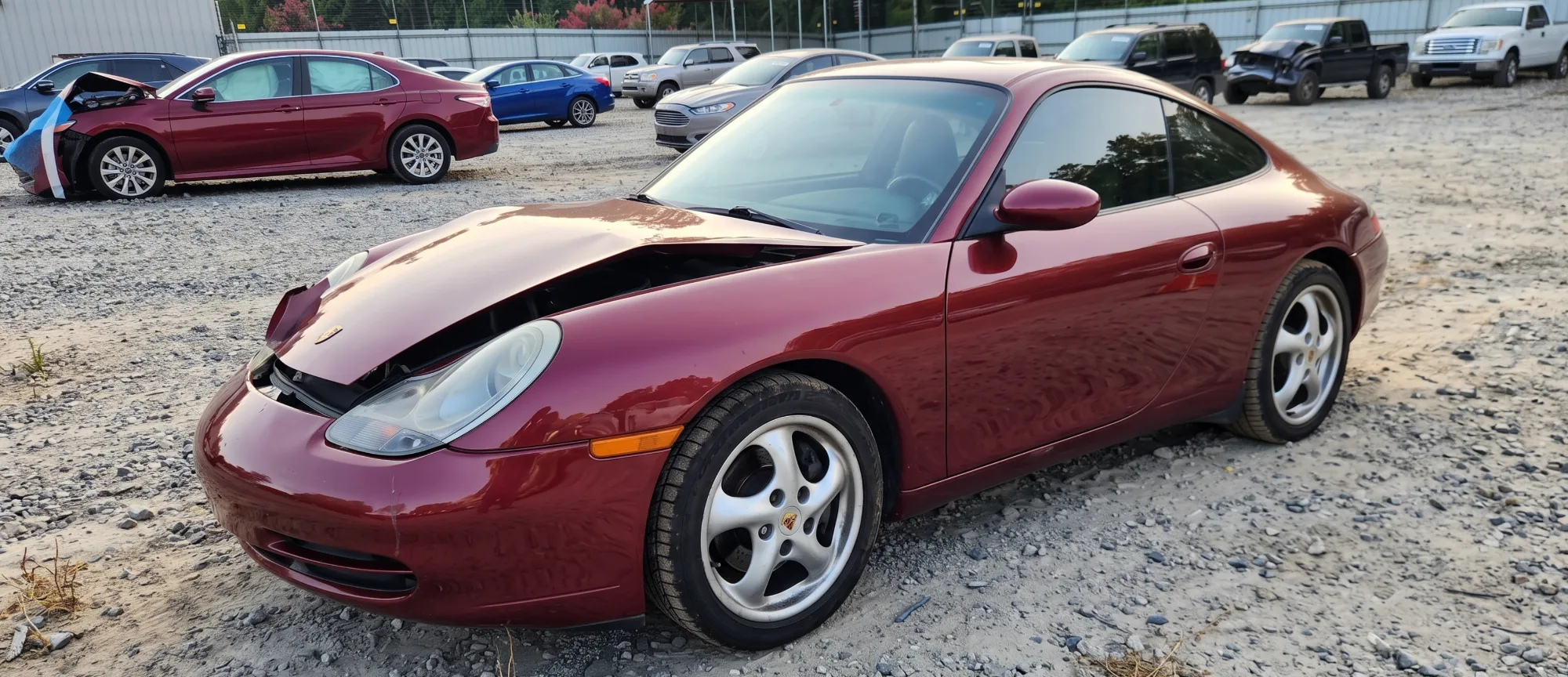
A rear hit on 996 is always a bad idea. The engine sits close to the rear bumper, and without an on-site inspection, which you can't get without a dealer license, you won't know what's inside. You can order an inspection: the basic one, detailed photos, about 100 dollars on Copart and IAAI, but it's surface-level. A proper one runs 400-500. If I can avoid a rear hit, I avoid it. The rule doesn't cover every case, but still.
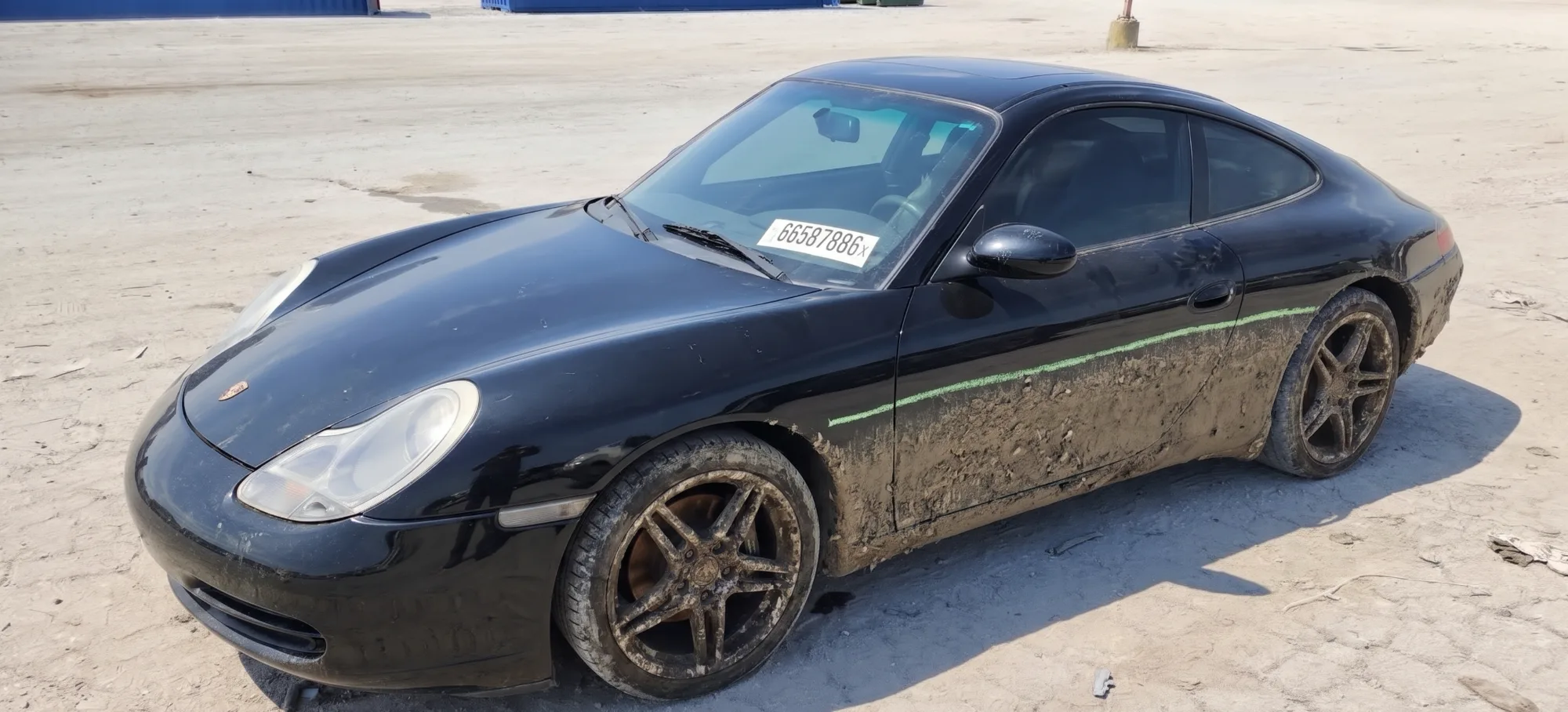
Flood. Pros and cons here. Look at the water: salt, near the ocean, is bad. Rainwater you can work with. What matters is how high the water rose and how long the car sat on the lot afterward. Auctions often, not always, mark a line showing the water level: look for it. The plus of this option: the car usually arrives with no external damage at all. The minus: be ready to throw the engine away. Possible, but far from guaranteed.
Why clean title ends up at auction
Rental companies. They usually act as their own insurers, so they don't brand the title, keep it clean, and make more on the sale. The internal mechanics run deeper: when reinvestment hits its limits (the 5 year restriction), they create insurance companies and reinvest into themselves through premiums. The companies are formally different, the owners are the same people. The seller is almost always listed on the lot, or readable through indirect signs: watch the name.
Repos, cars from under a loan. In our segment they barely exist: people who finance a 996 can usually pay for it.
Unfinished repairs. Something broke, the shop quoted, the customer couldn't pay, the repair never finished, the car went to auction. Sometimes a car like that is a doll: there can be sticks where the suspension should be. An inspection cures this. Or treat the purchase as a roller from the start and build all your math on that assumption.
Clean title, in short: not many scenarios, but they exist.
Who to buy from
Salvage is in a sense more predictable than clean: at least you know what happened to the car.
The best setup: the seller is an insurance company. It's listed on the lot, you see Progressive, Geico, you name it, excellent: the assessment was fair, nobody massaged the car, a good starting position.

Second: the main auction lot, not a sublot. Tens of thousands of cars run through a main lot, nobody has time to massage one specific car. Sublots vary, keep it in mind.
Private sellers on Copart are the most dangerous option. Always ask yourself: why is this person selling at auction instead of hand to hand? Best of all, buy directly from the auction or the insurer.
Sale types
Reserve: a minimum price is set. Win the bidding below it and the car most likely won't be sold to you. Sometimes the seller sends an offer, usually equal to that minimum, and the choice is yours.
On approval: usually sold by the auction itself. You win the lot, but that doesn't mean you've won: the bid can be approved, or you can get a counteroffer at a higher price. There's room to negotiate: they send their number, you answer with something between what they want and what you're ready to pay. No deal, the car goes back up for bidding.
Buy now: sometimes a decent idea. Check whether these cars actually sell above the buy now price at auction. Sometimes yes, not always.
Pure sale: whatever it goes for, it's sold, no conditions.
Fees and states
Some states require a dealer license to buy certain titles, and there you go through a broker. The broker takes a dealer fee and, as a rule, makes money on delivery too: Copart hauls to your door for 500, the dealer bills 1200. You ask how so, and they tell you "we don't use Copart delivery." It's a con, of course, but that's how they take 1500 off you instead of 400-800, and if you don't agree, they'll simply send you packing. If you can buy in states that don't require a license, do it.
On the other hand: licensed states have fewer buyers, and sometimes it's actually cheaper to pay the dealer fee than to fight the crowd in open states. Run both numbers.
Then the auctions themselves. Copart and IAAI collect several fees per purchase; cumulatively on a 996 budget at least 800-1300 dollars in auction fees alone. Plus tax by state. And important: keep the bill of sale. At registration, when they ask for tax, you show the title and the bill of sale, and the tax you already paid at auction gets deducted. Registration comes out cheaper.
The math
You found a car you like. Now count. Assess the potential damage, list the parts, and check availability and prices right away. Marketplace works best: private sellers often go below the yards. A yard will fight you for every penny, a private seller sometimes just wants the parts gone. Reference points from my experience: a hood at 200 dollars is a real purchase, many ask more, but 200 is the adequate number. Fenders 50-100. Small plastic sometimes goes nearly by weight. Lights are expensive: greedy resellers sit on them, buying auction cars themselves, parting them out and selling to you piece by piece. Haggle.
Delivery. Even if you own a trailer and a truck, like I do: if the auction isn't in your city, ordering delivery is cheaper. By the time you set everything up, hitch, fuel up, drive an hour there, wait two hours on the lot for them to release your car, drive back. As an adventure and as content it's interesting, as logistics it's not. An open trailer for two hours round trip runs me at least 100 dollars in fuel and the rest. Thinking about renting, do the same math.
Parts listed, fees listed, delivery listed. What remains is the delta: what you pay for the car and what you add on top. The minimum bar that makes entering the bidding worth it at all: 25% savings off retail. Better more. On 996 it usually comes out to 3-5-10 thousand saved, and on variants like turbo it reaches 20-30.
And about resale, honestly and upfront. Clean title is a calm resale. Salvage is a hustle: you will get lowballed, the car goes 20-25% under market. My private opinion: a salvage car is better kept. Your car will be in excellent shape, but people will circle it kicking tires. Selling is possible, just harder, and here's a recommendation for everyone: keep a build journal on Mods Nation. The car's history, what was done and how it was maintained, raises the value at sale significantly. Receipts mean something today, but not much: you can draw anything. A history is hard to fake.
Run and drive
Auctions write run and drive, or just start, or enhancement. Run and drive means: the car was started, most likely off a jumper, and it moved 3 feet. How it sounds and what's happening inside, unknown. IAAI now often posts video of the running engine with sound, Copart has started too, though not everywhere. It's no guarantee that oil isn't spraying out of a holed block or that the transmission isn't gone, but engine sound is always useful. Lots with video are preferable.
How to bid
Never bid early. An early bid inflates the price and signals the seller that the lot can go higher. Sellers, by the way, participate in their own auctions and pump their own lots. The strategy: bid in the last 10-20 seconds. The only exception is buy now, but buy now usually sits above what the car will actually sell for.
Write on a piece of paper the price past which you will not go. This matters: bidding heat is real, and Copart has done everything for it. Music, sounds, animation, everything to make the heart beat faster. Drink some water and mute the computer entirely. Without sound, the head sits in a noticeably cooler place.
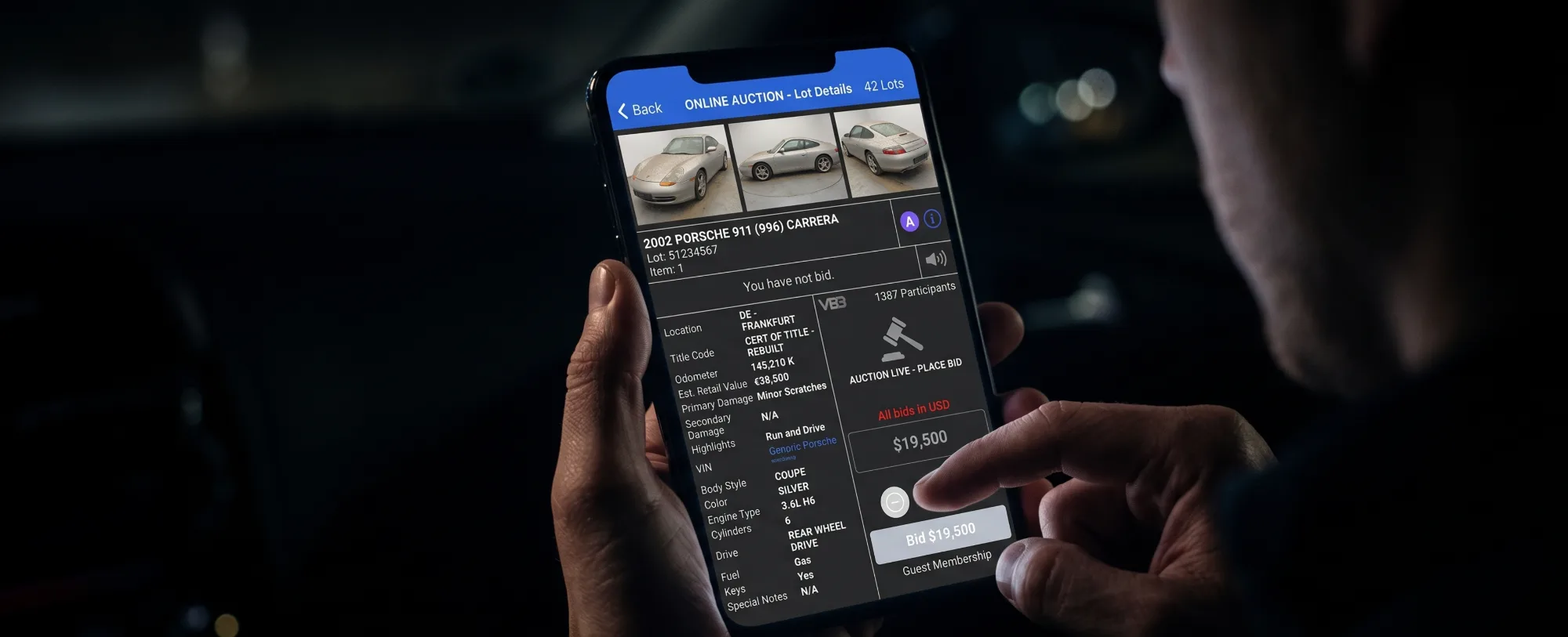
About the deposit. Buying without a dealer, you put down a security deposit. It doesn't participate in the bidding and it's refundable. It's not refunded in one case: you won and didn't pay. Then the auction keeps it and bills you 10%. People often don't pay that bill, so just the deposit goes: it is, in fact, those 10%.
You won. Now what
Payment within a short window, usually a few days, otherwise fines start, then the car gets relisted and your deposit vanishes. After winning you also have a short window to pull the car off the lot, then storage charges begin, sometimes 30-50 dollars a day. Hauling with someone other than Copart, prepare everything in advance.
Delivery ordered: every part scattered around the car on the lot must arrive with the car. When the driver calls, ask specifically to leave nothing on the lot and put everything inside.
If the car is post-flood, ask the driver not to start it. They don't always listen and your request may come to nothing, but after flood the engine and transmission are better left untouched until you go through them: if the water rose high, it stays in both.
Receiving
Save all the lot photos in advance. The car arrives: walk it from every side, looking for differences between what you ordered and what you got. Check every VIN against the documents; hopefully you did that from the photos before bidding. Buying direct, papers usually arrive before the car; through a dealer, after. Sometimes a lot says the auction doesn't have the title yet and is waiting on DMV: in that case you'll get the title regardless, just later.
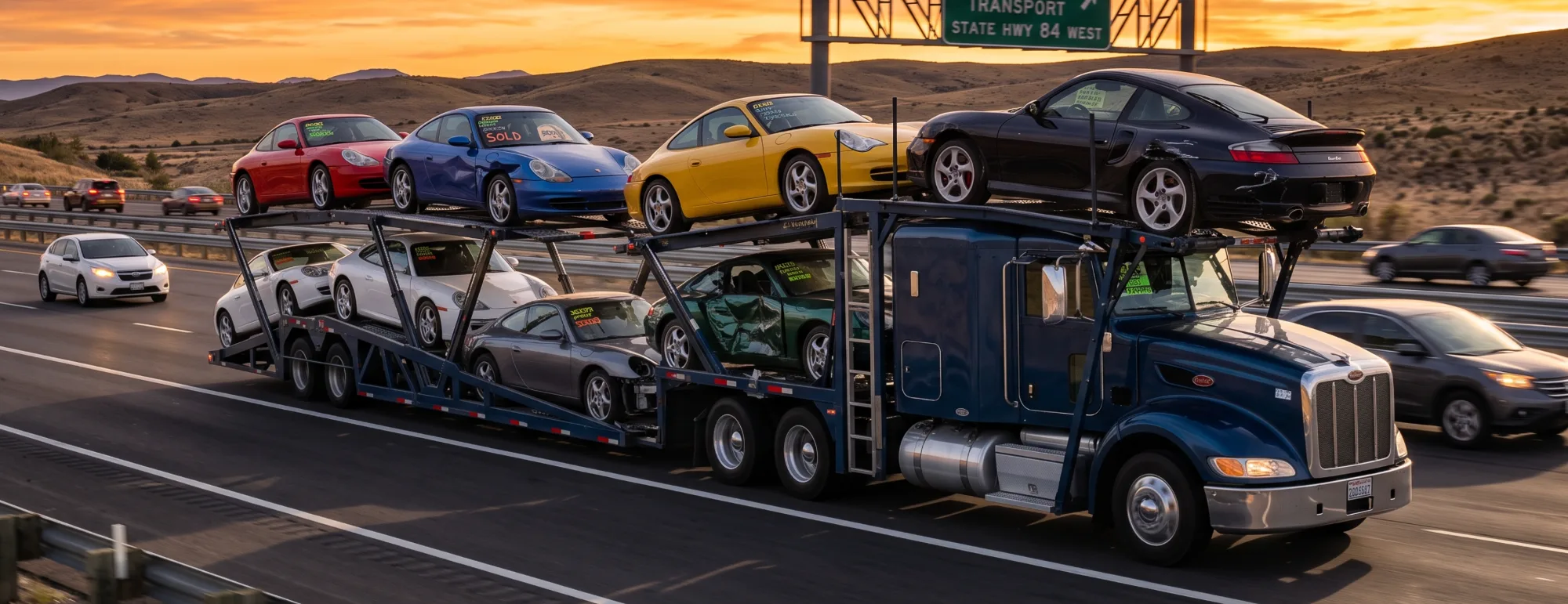
Inspect everything carefully for one more reason: haulers are not the most careful people and could have hit your car. They carry insurance and are obligated to deliver it whole. If something serious happened, you have the right to refuse the car and even get your money back. The procedure is complicated; I've never faced it personally, since everything I buy we take apart and build new cars out of.
Airbags separately: if the bags deployed and you're buying replacements, demand the VIN of the donor car from the seller.
Salvage inspection: the road to plates
With a salvage title the car has to pass an inspection; DMV usually has a dedicated division for it. Through DMV it doesn't cost much, an extra 100-200 dollars or so.
They'll want a package of documents: the original damage. Sometimes they ask what the repair was estimated at by the insurer, but you bought at auction and aren't obligated to provide that: you say you bought it at auction, and they won't press for those papers. The system is set up for a different scenario: mostly they deal with people who crashed, bought their own car back from the insurance with a salvage title, and got the damage estimate from the insurer. The auction case is simpler.
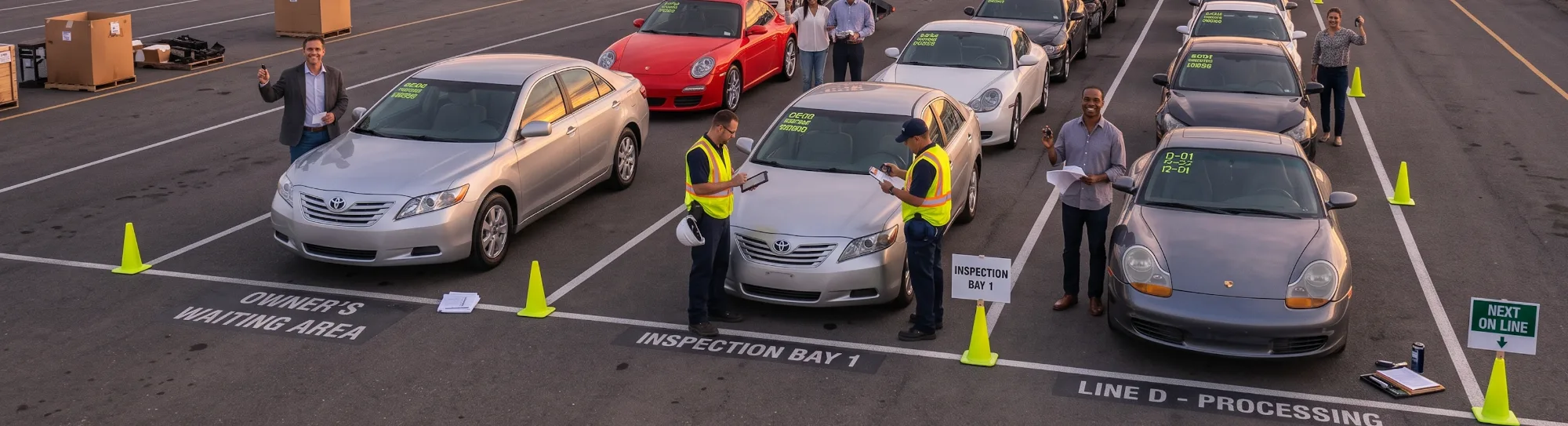
Collect the documents in three blocks: photos of the lot at the moment of purchase, photos of the repair process, the final state of the car. Plus title and bill of sale, plus invoices for every part you bought. Online stores are best for buying, eBay is fine too; the point is to keep every last invoice. Make a dedicated folder, separate the blocks, print everything.
When they ask about the repair, the answer is simple: I fixed it. That's enough. You don't have to walk them through every bolt you turned and how many foot-pounds you torqued it to. But some parts absolutely must be bought on paper, because no paper, no person: wheels, tires, fenders, all of it should trace to invoices. Buying from a private seller, you need at least a simple invoice, which you can prepare yourself and have the seller sign. The explanation "it's for the vehicle inspection" always works, nobody gets spooked by it.
The visit itself. There is exactly one reason you can show up for this inspection: the car is already repaired. They can issue a temporary registration, usually 10-15 days, and they won't issue it twice: miss your appointment and you're calling a tow truck. Plan ahead. The inspection is usually not deep: a walkaround and reading the mileage off the cluster. It varies by state, but that's the general scheme.
There's been a lot of commercialization around this lately. It used to be two weeks from walking in to the appointment; today, per some employees, it's two to three months. Private inspectors have grown up around it, and the DMV queue is suspiciously convenient for their business. Draw your own conclusions.
Private inspectors are a bit simpler and faster. They inspect the same way DMV does, and they treat the paperwork even more carefully, since they answer to DMV with it. The pricing: an inspection alone runs around 300-350 dollars, then you go to DMV yourself. The full package including plates reaches a thousand. My advice: not in a hurry, do everything through DMV. In a hurry, do the title with a private inspector and get the plates at DMV yourself, it comes out cheaper. Note: private inspectors don't issue temporary tags, you can't drive away from them. They hand you the initial document package, you take it to DMV and get temporary plates for 15 dollars.
And don't forget: even for temporary plates the car must already carry insurance. From my experience with Progressive and the like: standard liability on salvage goes through fine, at least it did when I was registering. Full coverage is a different conversation, case by case.
One last thing. Don't install the super mods before the inspection: exhaust deletes, long pipes and the rest. If the car growls, screams and generally comes across as a monster, the inspection may get complicated. Or may not. But to everyone into exhaust modification I'd suggest doing it after the inspection, not before.
Repair or upgrade
The pleasant part remains: fixing, if needed. Hail is pure cosmetics. Parts can be bought in advance or once the car lands. And remember: sometimes it's easier not to restore but to upgrade. Aftermarket, including no-name direct from China, sometimes costs less than OEM, body parts included. Example: a steering wheel with the airbag runs 700 dollars, aftermarket without a bag or with a bag of unknown type, 300-350. A safety question, of course, but worth having on the table. How to buy aftermarket from China properly will be a separate article. In short, any breakage is often an excuse to tune your car.
How to buy for zero
Now the tastiest part. It's not that hard, and there are two ways.
The first, straight and clear to everyone: buy not one car but two. Calculate in advance which parts are popular, what they cost and how fast they sell. Pull everything the first car needs off the second, sell the rest. With the right model choice this can cover both cars entirely. It takes time, but it works. It's also, by the way, a decent business you can start from nothing: it has its nuances, but with the right cars it's alive and well.
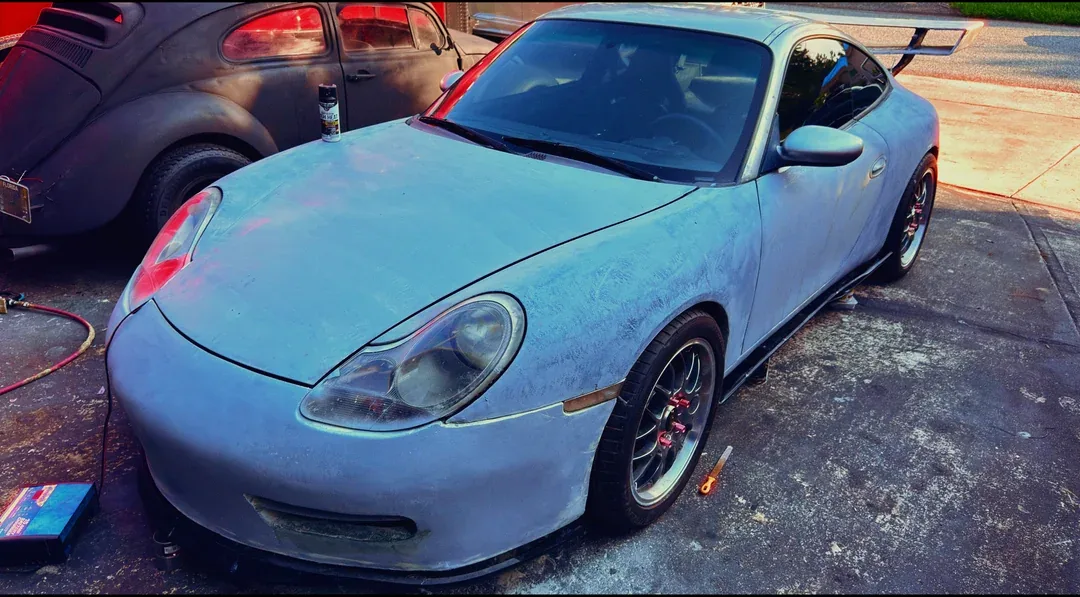
I do it differently. I pick a sports car, any brand: Ferrari, Porsche, Lotus, Mustang, anything you can think of. The one condition: it must carry tuning that I don't like, that costs serious money, and that I know to be fast-moving goods. Example: my latest 996 came with BBS LM, a set that runs six and a half thousand, and a rare cage worth four and a half new. The car, with its damage, came to me for 6 thousand. Selling the cage returned half immediately. The BBS LM could be sold any moment, demand is high: wheels like that go in 30 minutes on eBay or marketplace. I'll sell them a bit later on the platform; my widebody needs entirely different wheels. In effect, 996 came to me for zero dollars. Yes, I'll be putting work into it, but that's another story.
And here's what matters in this approach: it makes no difference whatsoever whether the car is broken or not, roller or not. If the mods paid the car off, you're already at zero, and you genuinely don't care what happens with this automobile next. Whichever way it goes, you only make money. Everything's broken? You decide: restore it, swap it, or part it out. There is no losing move left in this scheme.
So study the lot photos in detail and look for expensive parts installed: turbo, supercharger, carbon, seats, short shifter, exhaust and, of course, wheels and brakes. Sometimes selling one or two items covers the whole purchase. You'll be sitting with a calculator. I have it a bit easier, tuning is my trade and I know the prices by heart, but overall the task isn't hard. Cars like this don't show up every day, but they show up often: tuned cars get driven hard, and they crash more often than regular ones.
That's the story. Questions? Drop them in the comments. And happy bidding.